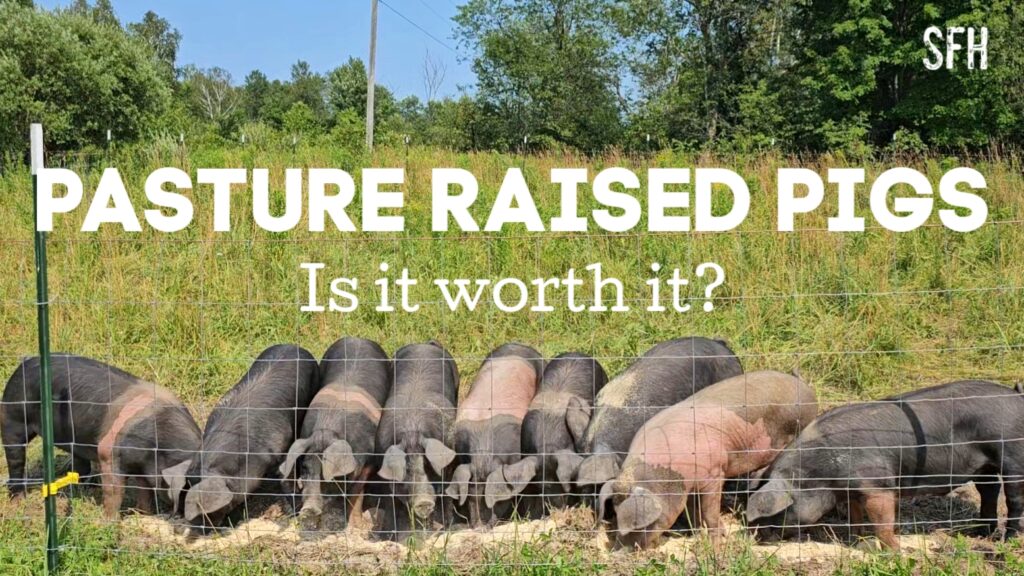


Here at Scott Family Homestead, we raise our heritage breed pigs outdoors on pasture. This allows pigs to engage in normal behaviors while growing a superior product for our customers. Only an estimated 2-4% of pork grown in the US is grown on dirt. While conventional systems, also called CAFOs or factory farms, grow most of the pork in the United States, the final product lacks the same nutrients and taste that can be achieved with pasture raised pigs. Additionally, there is a very drastic difference in conditions and welfare of the animals.
Food systems have developed over time to include much larger operations due to the number of people consuming pork and the efficiency of growing animals in small spaces. However, the welfare of factory farmed animals has been heavily criticized. For example, gilts and sows are often held in gestation crates and farrowing crates for pregnancy, birth, and nursing. This includes a cage with such a small footprint that the sow can not turn around or move freely. This practice is used to increase piglet survival, as one of the biggest risks to piglets is the possibility of being laid on by the mother pig. When growing for profits, loosing an entire litter can be detrimental. However, some states have started to limit the use of gestation and farrowing crates due to animal welfare concerns. There are other concerning practices often used in pork production, including the removal of tails and teeth clipping, to prevent animals from harming each other while in such tight, indoor quarters. While these practices are criticized, operating these large farms without preventative treatments and procedures would negatively affect animal welfare as well.
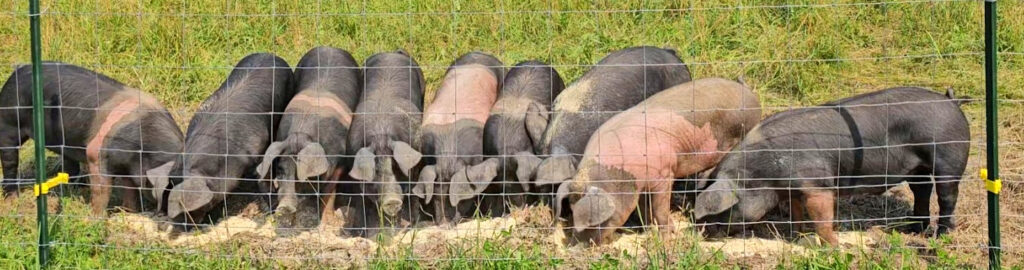
We choose to raise pastured pork for several reasons, including animal welfare, nutrition differences, health, and farm land management. We want to grow happy, healthy pigs under sunlight with nature’s nutrition available to them.
- Pastured pigs can engage in normal behaviors like foraging, rooting, using wallows, and nesting. Pigs naturally want to dig and root for food and to prevent boredom. This eliminates the need for docking tails or clipping teeth. Allowing pigs to cool in wallows and shade eliminates the need for temperature controlled barns.
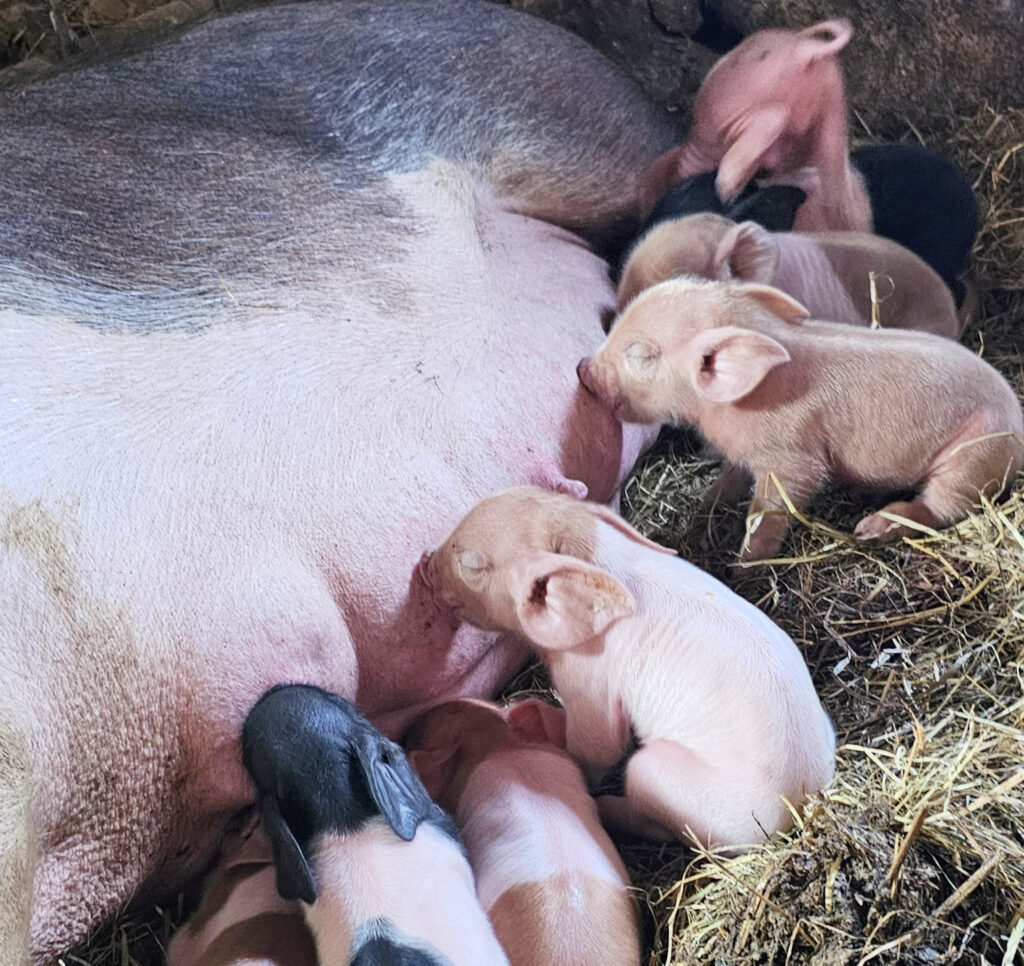
- Pastured pigs live lower stress lives in fresh air and sunlight. Like humans, their bodies regulate best with natural daylight and fresh air. Especially when given grass and pasture, pigs live low stress and entertaining lives. Our sows nurse their babies 2-3x the industry standard of just 3-4weeks. Our pigs breed naturally rather than using AI.
- Pigs raised in smaller settings can receive individual care and monitoring, making for healthy pigs with less intervention. It is rare to need any kind of antibiotics or vitamin treatments in pasture raised pigs. While instances do occur where treatment is needed, a holistic approach can be taken, beginning with separation of the sick hog. Individual treatment is possible with less unnecessary preventative measures needed.
- Studies show that pastured pork has 2.4x Omega 3’s, twice the vitamin E, up to 3x more vitamin D, and higher protein. This becomes obvious in both the appearance and taste of pasture raised pork. This difference is found to be present even if the pigs are heavily fed grain. The act of living on dirt is enough to change the vitamin and mineral content of pork.
- Pigs can help maintain soil health, eliminate invasive species, and increase biodiversity. With good pasture rotation and integrating other animals such as chickens, soil health and nutrition can be greatly improved. Pigs have been used to eliminate invasive species and instead increase native biodiversity. If needed, these pastures can be planted with your preferred cover crop.
Pastured pork does require more time and space to grow out, requires more work to maintain temperatures and shade, and is not as cost effective as larger operations. However, we believe the benefits far outweigh the extra time and costs. We grow our pigs for 8 months instead of 5-6 and pay a higher fee for the supplemental grain they are fed. This in turn factors into the cost of our final product. The USDA puts out a report of average pasture raised pork prices including the “pasture premium” or cost difference in buying pasture raised pork. We try our best to stay under the average prices, knowing that we want to provide the superior nutrition to as many people as possible. See the USDA report here: https://www.ams.usda.gov/mnreports/lsmnprpork.pdf
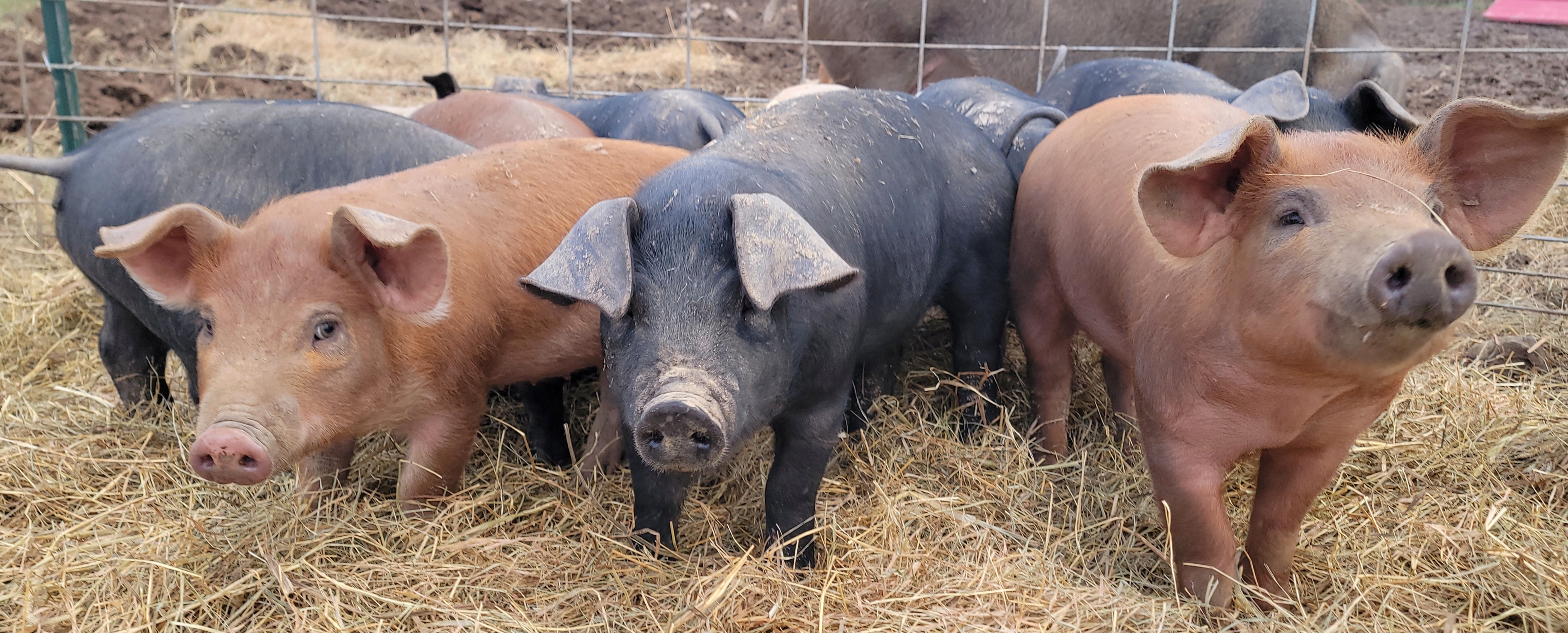
Here at Scott Family Homestead, we are very proud of the pork products we sell. From our more affordable half and whole shares to our individual cuts of meat, we try our best to make these products accessible and affordable for our local community. If you are local to us in north central Wisconsin, I hope you will give our products a try and see the pasture raised difference!